
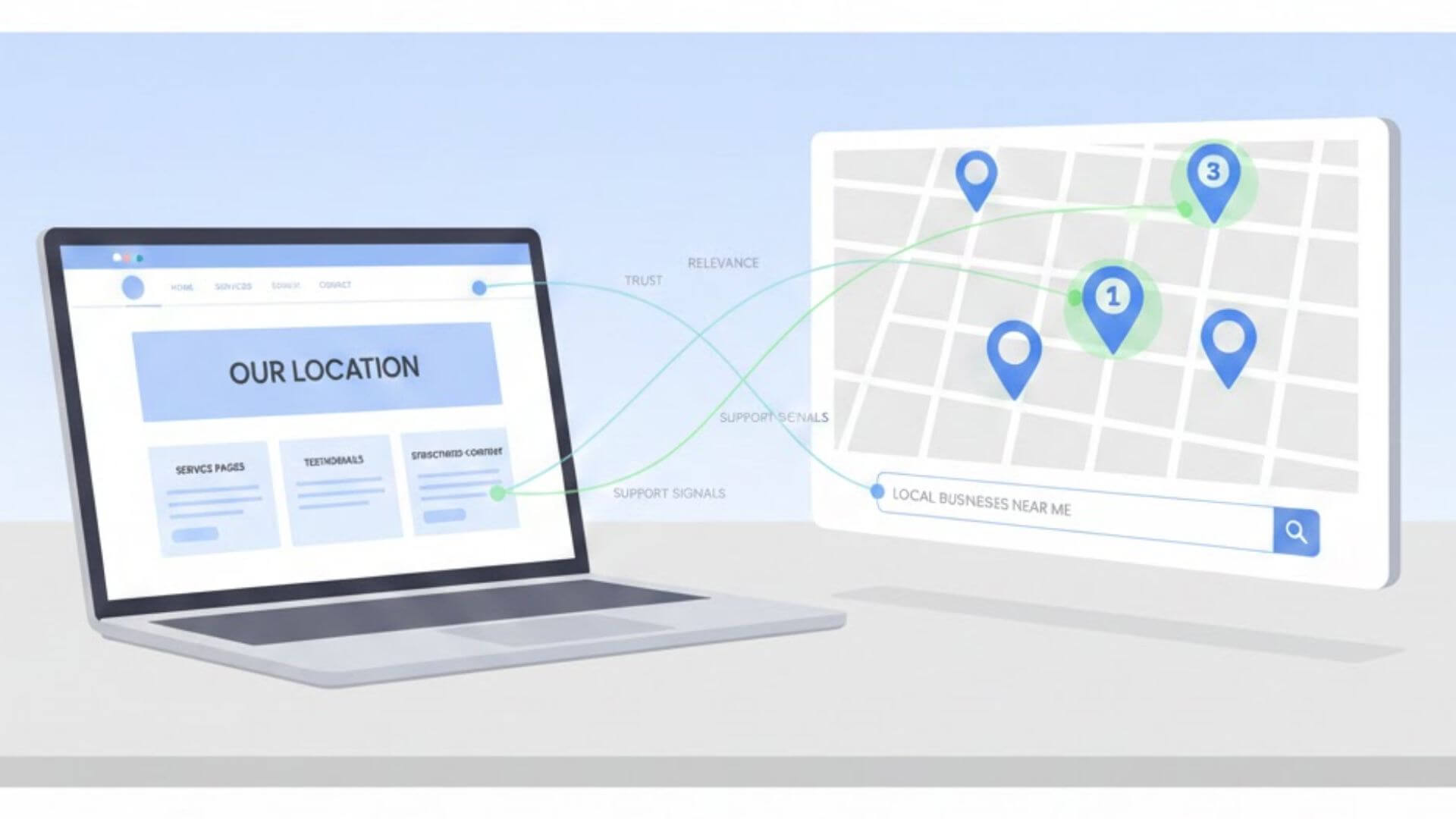
Website impact on Google Maps ranking matters because Google does not evaluate your Google Business Profile in isolation. Instead, Google cross-checks your profile with your website to confirm business legitimacy, relevance, and consistency. When your website clearly supports the information shown in your profile, Google gains more confidence in displaying your business for local searches.
The influence of a website on Maps ranking is indirect but strong. Your website helps Google understand what services you offer, where you operate, and how trustworthy your business is. Clear service pages, accurate location details, and strong on-page signals all reinforce the relevance of your Google Business Profile. A weak, outdated, or inconsistent website can limit Maps visibility even if the profile itself looks optimized.
It is important to set the right expectation. A website does not replace Google Business Profile optimization, and it cannot rank a business on Maps by itself. Instead, the website works as a support layer. When both the website and the profile send aligned signals, Google can rank the business more confidently and consistently in local Maps results.

Google uses your website as a supporting data source when deciding how confidently it can rank your business in Maps results. While the Google Business Profile remains the core asset, the website impact on Google Maps ranking becomes important when Google evaluates trust, relevance, and local intent signals together.
Google checks the website to validate that the business is real, active, and consistent with the information shown in the Google Business Profile. A clear, well-structured website helps confirm legitimacy.
Key trust signals include:
When the website looks credible and aligned with the profile, Google gains more confidence in showing the business on Maps. Poor website quality, broken pages, or inconsistent details can weaken that confidence, even if the profile appears complete.
Websites also help Google understand what local searches your business should appear for. Page content supports local keyword matching by explaining services, locations, and service areas in detail.
Important relevance signals include:
These local signals help Google connect the website with nearby search intent. When the website reinforces local relevance, it strengthens how the business qualifies for Maps visibility alongside the Google Business Profile.
Website SEO for GMB plays an important role in strengthening how Google understands and ranks your business locally. While Google Business Profile remains the main asset for Maps, website SEO helps reinforce relevance, authority, and consistency across local search signals.
Strong website SEO supports Google Business relevance by clearly explaining what your business offers, where it operates, and who it serves. Well-optimized service pages, clear headings, and structured content help Google connect your website with the information shown in your profile. When both assets align, Google can match your business more confidently to local discovery searches.
Weak or missing SEO limits Maps performance even if the Google Business Profile looks complete. A website with thin content, unclear services, or poor structure gives Google fewer signals to verify relevance. This can reduce how often your business appears for non-branded or service-based searches, especially in competitive areas.
Website optimization also plays a role in discovery searches. Discovery searches happen when users search for services instead of business names. When your website clearly targets local intent and service relevance, it supports your Google Business Profile in appearing for these searches. As a result, website SEO becomes a supporting factor that helps expand visibility beyond branded queries and improves overall local reach.
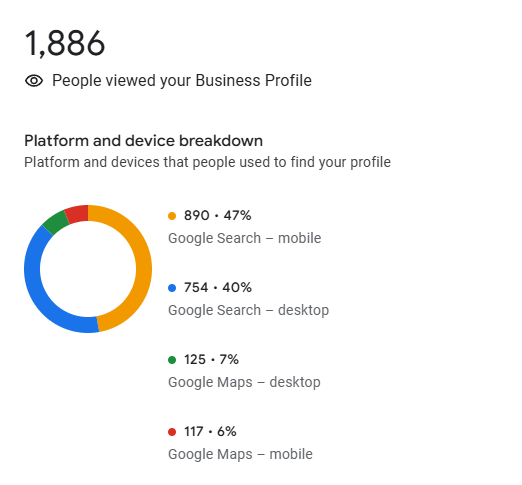
On-page local ranking factors help Google connect your website with your Google Business Profile and local Maps results. These factors do not replace profile optimization, but they strongly support Maps visibility by reinforcing relevance, accuracy, and location context.
Key on-page local ranking elements include:
When these on-page local ranking factors work together, they create a stronger foundation that supports Google Maps visibility and improves overall local search performance.
Your website acts as the local SEO foundation that everything else builds on, including your Google Business Profile. While Maps rankings rely heavily on the profile, Google still uses the website as a base layer to verify accuracy, relevance, and trust. Without a strong foundation, even a well-optimized profile can struggle to perform consistently.
Google Business Profiles rely on website accuracy to confirm core details such as services, locations, and business legitimacy. When the website clearly reflects the same information shown in the profile, Google sees fewer conflicts and more reliable signals. This alignment reduces uncertainty and helps Google trust the business in local results.
Website signals also connect directly with Maps trust. Clear service pages, location details, and structured content reinforce that the business operates where it claims and offers what it promotes. This is why a solid local SEO foundation matters. When the website supports the profile with accurate and consistent signals, Google can rank the business with greater confidence in Maps and local search.
Website content plays a direct role in helping Google understand how relevant your business is for local searches. While the Google Business Profile introduces your business, the website explains it in detail. When content clearly supports what the profile claims, Google can match your business more accurately to search intent.
Service pages send stronger relevance signals than the homepage alone. A homepage provides a general overview, but dedicated service pages explain specific offerings in depth. These pages help Google connect individual services with local searches, which improves discovery visibility in Maps results.
Localized content also helps align with local intent. Pages that naturally mention service areas, cities, or neighborhoods help Google understand where your business operates. This content should focus on real coverage areas rather than keyword repetition. Clear, location-aware explanations improve matching without risking over-optimization.
Thin or generic content weakens relevance. Pages with little detail, copied text, or vague service descriptions give Google limited information to work with. Avoiding thin content ensures that the website adds value as a support signal instead of becoming a weak link in your local SEO setup.
Technical website factors influence how well Google can access, understand, and trust your site. While these factors do not directly rank a business in Maps, they affect how strongly your website can support Google Maps ranking signals.
Key technical elements include:
When technical issues stack up, the website becomes less reliable as a supporting asset. Fixing these factors helps maintain a strong technical base that reinforces local trust and Maps performance.
Certain website issues can weaken how well your business performs in Google Maps, even if your Google Business Profile looks optimized. These problems reduce trust, relevance, and clarity, which limits how confidently Google can show your business in local results.
One common issue is the absence of clear location signals. When a website does not mention service areas, cities, or physical locations, Google struggles to connect the business with local intent. This makes it harder for the profile to appear in Maps for nearby searches.
Another problem is mismatched information between the website and the Google Business Profile. Differences in business name, address, phone number, or services create conflicting signals. These inconsistencies reduce trust and can lower Maps visibility over time.
Outdated or broken pages also hurt performance. Pages with old information, missing content, or errors limit the website’s ability to support local relevance. Google relies on fresh and accurate pages to confirm that a business is active and reliable.
Thin service content is another major issue. Pages with very little detail or generic text fail to explain what the business actually offers. Without clear service explanations, Google has fewer signals to match the business with relevant Maps searches.
Improving your website in a structured way helps strengthen the signals that support Google Maps ranking. This step-by-step process focuses on alignment, clarity, and technical stability rather than quick fixes.
Following this structured approach ensures that website optimization supports Google Maps visibility in a stable and sustainable way.
Website optimization and Google Business Profile optimization work best when handled together, not as separate tasks. Google evaluates consistency across both assets to decide how confidently it can rank a business in Maps. When updates happen in isolation, signals often conflict and weaken overall visibility.
Professional local SEO services follow a structured approach that aligns website content, local signals, and Google Business Profile data at the same time. This coordination ensures that services, locations, categories, and engagement signals support each other instead of sending mixed messages to Google. As a result, Maps relevance and trust improve more steadily.
Relying on manual, uncoordinated fixes often leads to gaps, over-editing, or missed signals. A structured local SEO strategy helps businesses avoid guesswork, reduce errors, and build a stronger website – Maps connection that supports long-term local visibility rather than short-term fluctuations.
Google Maps rankings can stall even when a Google Business Profile appears fully optimized. This usually happens when the website no longer supports the profile with strong and consistent signals. In these cases, profile optimization alone stops producing results.
One clear sign is when updates to the Google Business Profile do not improve impressions or engagement. If categories, services, reviews, and photos are active but visibility remains flat, website limitations often block further growth. Weak content, missing local signals, or technical issues reduce Google’s confidence.
Other warning signs include declining discovery searches, inconsistent ranking movement, or competitors with stronger websites outperforming your profile. These signals indicate that the website is not reinforcing relevance or trust at the same level.
When these patterns appear, website fixes should take priority. Strengthening service pages, improving local content, and resolving technical problems restores the support layer that Maps rankings depend on. Once the website and profile work together again, visibility can resume a more stable upward trend.
Use this checklist to confirm that your website properly supports Google Maps visibility and reinforces your Google Business Profile signals.
When all items in this checklist align, the website becomes a strong support layer that improves confidence and stability in Google Maps ranking.
Your website plays a supporting role in Google Maps ranking, not a shortcut to instant visibility. Google still relies on the Google Business Profile as the primary ranking asset, but it uses the website to confirm accuracy, relevance, and trust. When the website fails to support the profile, Maps performance often stalls.
Consistent website optimization matters more than one-time fixes. Regular content updates, accurate local signals, and strong technical health help maintain alignment with your Google Business Profile. This steady approach prevents conflicting signals and keeps trust intact.
When maintained properly, website health becomes a long-term Maps ranking asset. A reliable website strengthens confidence, supports local relevance, and helps Google rank the business more consistently in local Maps results over time.