

Photo SEO means something very different for Google Maps than it does for websites. Many businesses assume that adding more images or optimizing filenames will directly push their profile higher in Maps results. In reality, photos do not rank a profile on their own.
Images influence visibility indirectly. Google uses photos as engagement and credibility signals, watching how users interact with them and whether they accurately represent the business. Clear, relevant photos help people trust what they see, which leads to more actions like clicks, calls, and direction requests.
Photo SEO is about accuracy, relevance, and consistency, not technical tricks. Outdated, misleading, or irrelevant images quietly reduce engagement without obvious warnings. Over time, this affects how often a profile is shown.
This guide explains how google business photo seo works in a Maps context and how images support visibility safely by building trust and encouraging real user engagement.
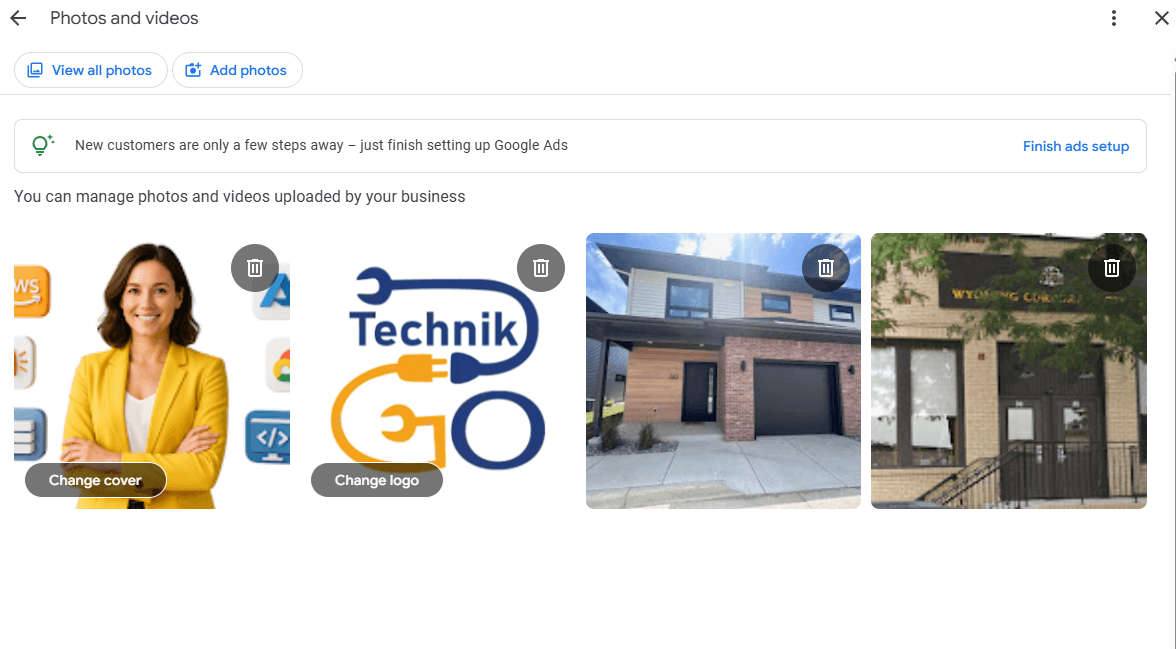
Photo SEO for Google Business Profiles is not the same as image optimization for websites. Traditional image SEO focuses on file names, alt text, and page relevance. In a Maps environment, those technical elements carry far less weight.
Google Maps works differently because it is driven by user intent and real-world context. Instead of ranking images themselves, Google evaluates how photos help users understand a business. The platform looks at whether images are accurate, recent, and relevant to what the business claims to offer.
Google interprets business images as trust indicators. Photos that clearly show the location, services, and activity help confirm that a business is real and operating as expected. This is why intent and realism matter more than optimization tricks or heavy editing.
This approach builds on photo optimization for Google Business explained in prior guides, where accuracy and consistency support long-term visibility.
Google displays images in several key areas of Google Maps. Photos appear in the business preview, image carousels, and listing details, often before a user clicks deeper into a profile. This makes images part of the decision-making process early in a search.
There is an important difference between business-uploaded and user-uploaded images. Business photos help explain what the business offers and what the location looks like. User photos add authenticity by showing real experiences from a customer’s perspective. Google evaluates both together.
Freshness and relevance matter because they signal that the business is active and accurately represented. Recent photos help confirm that services, interiors, and locations are current.
Google also cross-checks photos with other signals such as reviews, categories, and website content. When images align with these elements, trust increases and the profile becomes easier to surface consistently.
Photos do not directly determine where a business ranks on Google Maps. There is no setting, upload trick, or photo volume threshold that pushes a profile higher on its own. This is an important distinction, because many businesses assume images work like keywords.
Photos influence visibility indirectly through engagement and trust. When users view images, spend time on the profile, and take actions like calling or requesting directions, Google sees signals that the listing is useful. Over time, this engagement supports stronger visibility compared to profiles that feel inactive or unclear.
There is a clear relationship between photos, user actions, and trust. Accurate images help people feel confident, which leads to more interactions. Misleading or low-quality images reduce that confidence and quietly limit engagement.
Manipulation does not work. Uploading irrelevant images, over-editing photos, or trying to game volume usually backfires. Photos support broader Maps ranking signals only when they reflect reality and encourage genuine user behavior.
Photos influence Maps visibility through the signals they generate, not through technical optimization alone. These signals help Google understand whether a profile is useful and trustworthy.
Engagement comes from how users interact with images. When people click on photos, scroll through galleries, or spend time viewing them, Google sees signs of interest. These interactions suggest that the profile is helping users make decisions.
Interaction matters more than volume. A small set of clear, relevant photos that users engage with consistently is more valuable than dozens of images that are ignored. Engagement reflects usefulness, not quantity.
Photos also support visibility by reinforcing accuracy. Images should match the services offered, the physical location, and the customer experience. When photos align with categories, reviews, and website content, confidence increases.
Outdated visuals weaken trust. If photos no longer reflect the business, users hesitate and engagement drops. Mismatches between photos and reality reduce confidence for both users and Google.
Photo SEO mistakes rarely cause sudden drops, but they quietly reduce trust and engagement over time. Many of these issues come from misunderstanding how photos support Maps visibility.
Uploading irrelevant or stock images is one of the most common problems. Stock photos may look polished, but they do not reflect the real business. When images feel generic or unrelated, users disengage and trust declines.
Large one-time uploads with no updates can also hurt performance. Adding many photos at once and then leaving the profile untouched signals inactivity over time. Google favors steady, ongoing photo activity.
Over-editing or using misleading visuals creates unrealistic expectations. When customers notice a mismatch, confidence drops. Ignoring customer-uploaded photos is another missed opportunity. User images often shape first impressions, and leaving them unmanaged can weaken credibility.
Image optimization for Google Business Profiles works best when it stays simple and honest. The goal is clarity, not keyword tactics. Photos should help users understand the business quickly, not try to signal relevance through technical tricks.
File quality and orientation matter at a basic level. Images should be clear, properly lit, and uploaded in the correct orientation so they display well on both mobile and desktop. Cropped or rotated photos that look awkward reduce engagement.
Filenames and EXIF data have limited impact in a Maps context. Unlike website SEO, Google does not rely heavily on image metadata to rank local profiles. Spending time trying to optimize technical details usually delivers little value.
What matters more than technical tweaks is usefulness. Real photos that match services, location, and customer expectations consistently outperform heavily optimized images that lack context or accuracy.
Photo activity contributes to overall profile health. When images are updated regularly, they signal that the business is active and accurately represented. This helps Google feel more confident showing the profile to users.
Proximity alone is not enough to maintain visibility on Google Maps. Many businesses share similar locations, especially in competitive areas. Photo activity helps differentiate profiles by showing which businesses look current, engaged, and trustworthy.
Steady photo updates support engagement. When users see recent images, they are more likely to interact with the profile, explore services, and take action. This ongoing interaction reinforces the value of the listing over time.
There is a clear relationship between visuals and actions. Clear, relevant photos encourage calls, direction requests, and visits. These actions help support consistent Maps performance without relying on risky tactics.
Improving images can strengthen trust and engagement, but photos are only one part of how Google evaluates local businesses. Some profiles look great visually and still struggle to gain consistent visibility. This usually means other signals, like categories, accuracy, reviews, or overall activity, are holding the profile back. In these cases, continuing to upload photos alone will not solve the deeper problem. For businesses that want a clearer path after improving images, working with a professional maps ranking service can help identify deeper visibility issues and fix them safely. A broader review helps ensure photos, profile details, and engagement signals all work together instead of in isolation.
Long-term photo SEO works best when it reflects the real business consistently. Using real photos instead of stock images builds familiarity and trust over time. Customers want to see what the business actually looks like today, not an idealized version.
Update images when something changes in the real world. New services, renovations, seasonal setups, or team changes are all good reasons to add fresh photos. This keeps the profile accurate without forcing unnecessary updates.
Avoid reactive or bulk uploads. Adding many photos at once in response to a ranking change often creates noise instead of clarity. Google tends to reward steady, natural activity rather than sudden bursts.
Consistent photo updates help build trust with both users and Google. When images stay current and relevant, they support engagement and reinforce the overall health of the profile over the long term.
Photo SEO plays a supporting role in Google Maps visibility. Images do not rank a business on their own, but they influence how users interact with a profile. That engagement and trust are what matter most over time.
Technical tricks have very little impact in a Maps environment. Real, accurate images that reflect the business honestly outperform heavily optimized visuals that feel staged or misleading. When photos match what customers actually experience, confidence increases naturally.
Consistency is the key. Regular, thoughtful photo updates support profile health and reinforce credibility without risk. Over time, these steady practices help maintain visibility and encourage real actions.
Take a moment to review your current Google Business photos and check whether they still reflect how customers experience your business today.