
Table of Contents
ToggleCompetitor Google Business analysis matters because local rankings are comparative by nature. Your listing does not rank in isolation. It competes directly with nearby businesses targeting the same services and locations on Google Maps.
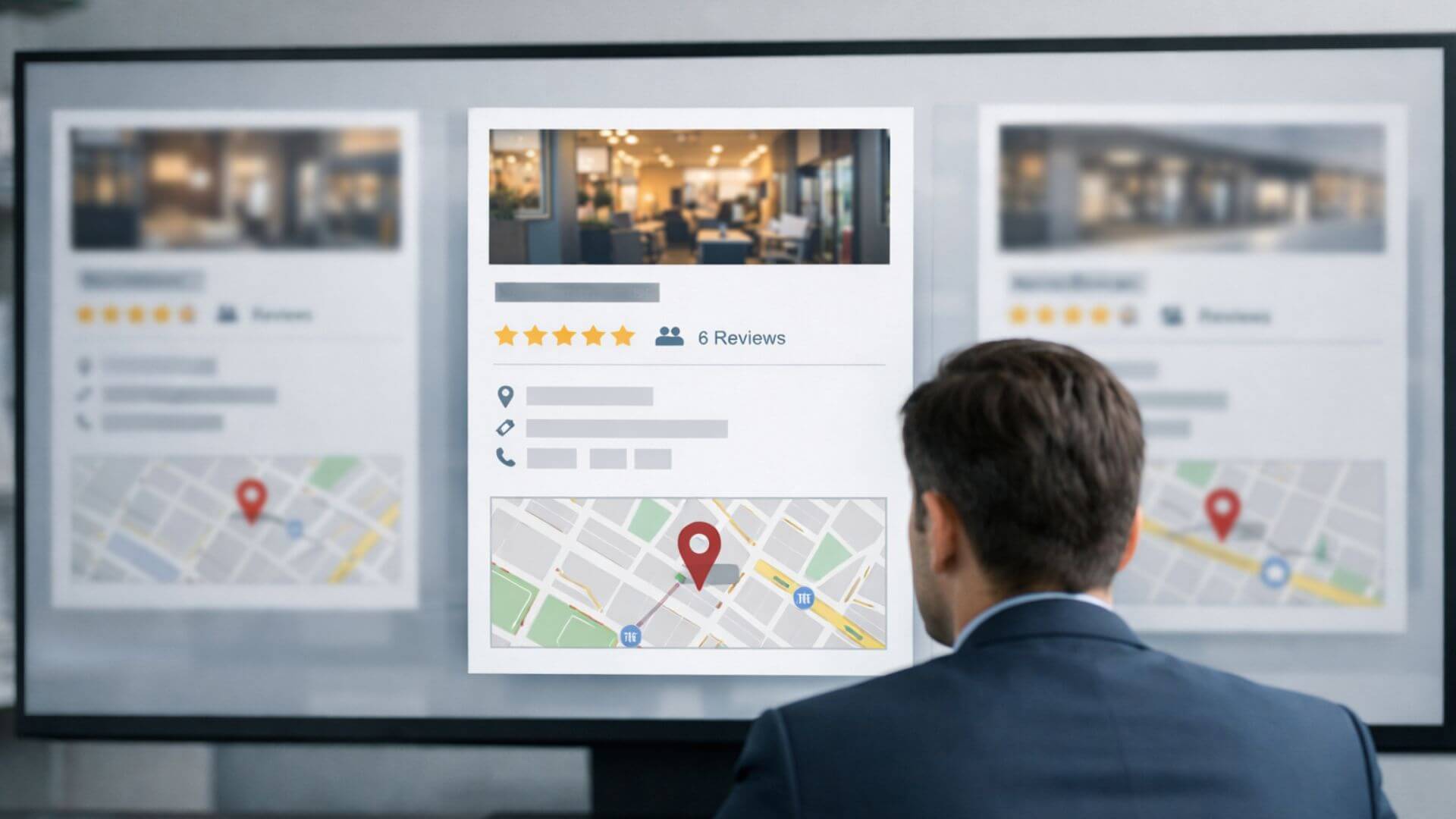
When multiple Google Business Profiles appear for the same search, Google evaluates them side by side. Small differences in categories, relevance signals, review activity, and profile completeness decide who appears in the map pack and who stays hidden.
This is why competitor analysis is critical in local SEO. It helps you understand:
It is important to set the right expectation. Competitor Google Business analysis does not offer shortcuts or quick wins. It reveals patterns, not tactics to copy blindly. The goal is to learn what Google rewards in your market and apply those insights safely to improve long-term visibility.
Before you spy competitor listing activity, you must identify which competitors actually influence your rankings. Analyzing the wrong listings leads to false conclusions and wasted effort.
Not every visible business is a true competitor in Google Maps.
Focus on businesses that:
Large brands or distant locations may appear occasionally but do not reflect your ranking environment.
Some competitors rank higher simply because they are closer to the search location. These are proximity-based competitors.
Ranking competitors, however:
These listings reveal optimization patterns worth studying.
Branded competitors rank when users search their business name. Discovery competitors rank for service and category searches.
For competitor Google Business analysis, focus on discovery competitors. These listings compete for the same non-branded keywords and provide real insight into how Google evaluates relevance and prominence.
Choosing the right competitors ensures your analysis reflects ranking reality, not surface-level visibility.
A proper GMB competitor review focuses on how profiles are structured, not on copying what competitors write. Google evaluates multiple profile elements together, and small differences often explain ranking gaps.
Business names and categories shape relevance at the highest level. When reviewing competitors, look for patterns – not violations.
These elements refine relevance and help Google match listings to search intent.
This structured review helps identify why competitors rank – without risking guideline violations or unstable optimization.
Competitor reviews reveal behavioral and trust patterns that influence local rankings. When done correctly, review analysis shows how competitors build prominence – not how to fake reviews.
Focus on trends, not individual comments.
Review analysis helps you understand how prominence grows over time – without encouraging risky or artificial review practices.
Category selection is one of the strongest ranking factors in local search. Analyzing competitor category strategy helps explain why certain listings consistently appear in the map pack while others do not.
Start by comparing primary categories. Top-ranking competitors usually share the same primary category that best matches search intent. If your category differs, Google may see your listing as less relevant – even if services overlap.
Next, identify category overlaps. Strong competitors often use secondary categories to support, not replace, their primary focus. Overlapping categories across multiple top listings reveal which services Google associates most closely with your market.
For deeper insight into how category choices affect visibility and risk, review our related guide on competitor category strategy; competitor threats. Understanding these patterns allows you to refine categories safely without copying violations or triggering visibility issues.
Photos and posts help Google measure activity, relevance, and real-world presence. Competitors who rank consistently use these features in structured, predictable ways – not randomly.
Start with photo volume and freshness. Top listings usually add new photos regularly. Fresh images signal that the business is active and operating, which supports ongoing visibility.
Next, review geo-related images. Competitors often upload photos taken at real locations – storefronts, service areas, interiors, or on-site work. These images reinforce location trust and reduce doubt about legitimacy.
Finally, look at posting frequency and intent. High-ranking competitors post updates with clear purpose, such as service highlights or announcements. Posts are not about volume – they support relevance and keep the profile active.
Understanding how competitors use photos and posts helps you match activity levels safely without copying content or overposting.
Tracking competitor visibility shows who ranks, where, and why. This step turns observation into usable data and helps avoid wrong conclusions.
List the main services you and your competitors offer. Focus on non-branded service keywords that trigger map pack results. These keywords create a fair comparison.
Search Google Maps from different locations within your service area. Rankings change by proximity, so checking only one location gives an incomplete picture.
Visibility patterns matter more than single checks. Monitor rankings weekly or monthly to see:
Some competitors rank higher only because they are closer to the search point. Others rank well across multiple areas due to strong optimization.
Separating these factors helps you understand which competitors reveal real strategy – and which simply benefit from location.
Competitor analysis helps when done carefully. When done poorly, it creates risk. Many businesses hurt their own listings by reacting too fast or copying the wrong signals.
Effective competitor analysis focuses on understanding behavior, not imitation. The goal is insight, not shortcuts.
Competitor analysis becomes valuable only when insights are used correctly. The goal is not to copy competitors, but to understand what Google rewards in your local market and apply those signals safely.
When done properly, competitor data guides optimization by:
This replaces guesswork with structure.
Structured Google Business optimization focuses on alignment, stability, and relevance. Instead of random edits, changes are made based on proven patterns observed across multiple competitors.
Safe implementation matters. Applying insights without considering guidelines or trust signals can trigger filters or suspensions. A professional Google Business Profile optimization service helps turn competitor analysis into controlled improvements that strengthen visibility without increasing risk.
Competitor analysis sometimes uncovers competitor threats that go beyond normal competition. These situations require caution, not imitation.
Some competitors rank by abusing Google Business features. They may use excessive keywords, fake services, or misleading information. These listings distort the ranking environment and push legitimate businesses down.
These tactics create unfair visibility and increase risk across the market.
Not every violation should be reported. Monitoring is often safer when:
Smart analysis helps you decide when to observe, when to document, and when to act – without exposing your own listing to unnecessary risk.
Use this checklist to keep competitor Google Business analysis accurate, safe, and useful. Each step helps turn observation into insight without creating risk.
Following this checklist ensures competitor analysis supports long-term visibility and safe optimization.
Competitor Google Business analysis works best when it focuses on understanding patterns, not copying tactics. Imitation often leads to guideline issues, while analysis leads to informed decisions.
Data-driven insights help you choose what to improve, what to ignore, and what to monitor. When decisions are based on consistent trends instead of assumptions, visibility improves more safely.
Competitor tracking should be an ongoing process, not a one-time task. Local search changes constantly, and regular analysis keeps your Google Business Profile aligned, competitive, and protected over the long term.
Analyze competitor Google Business Profiles, uncover category and visibility gaps, and find out exactly what’s holding your listing back.